Measurement horns for EMC testing, calibration and antenna measurements
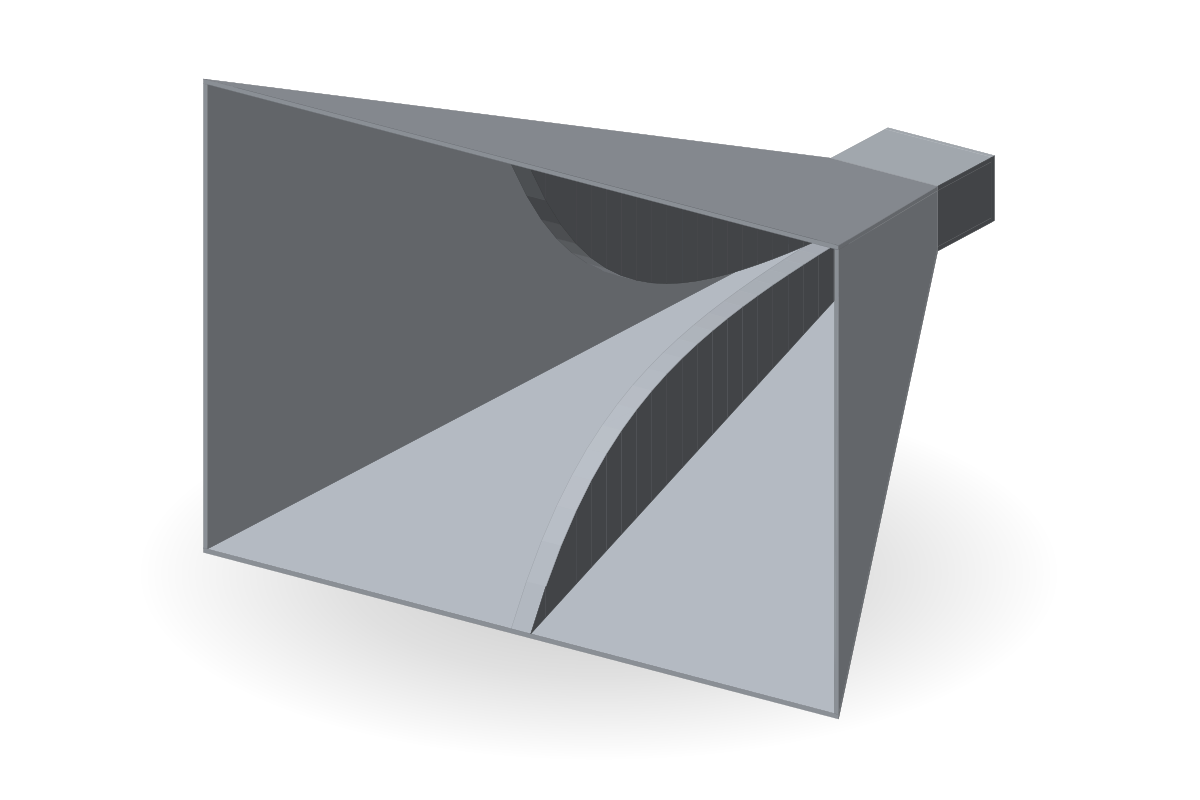
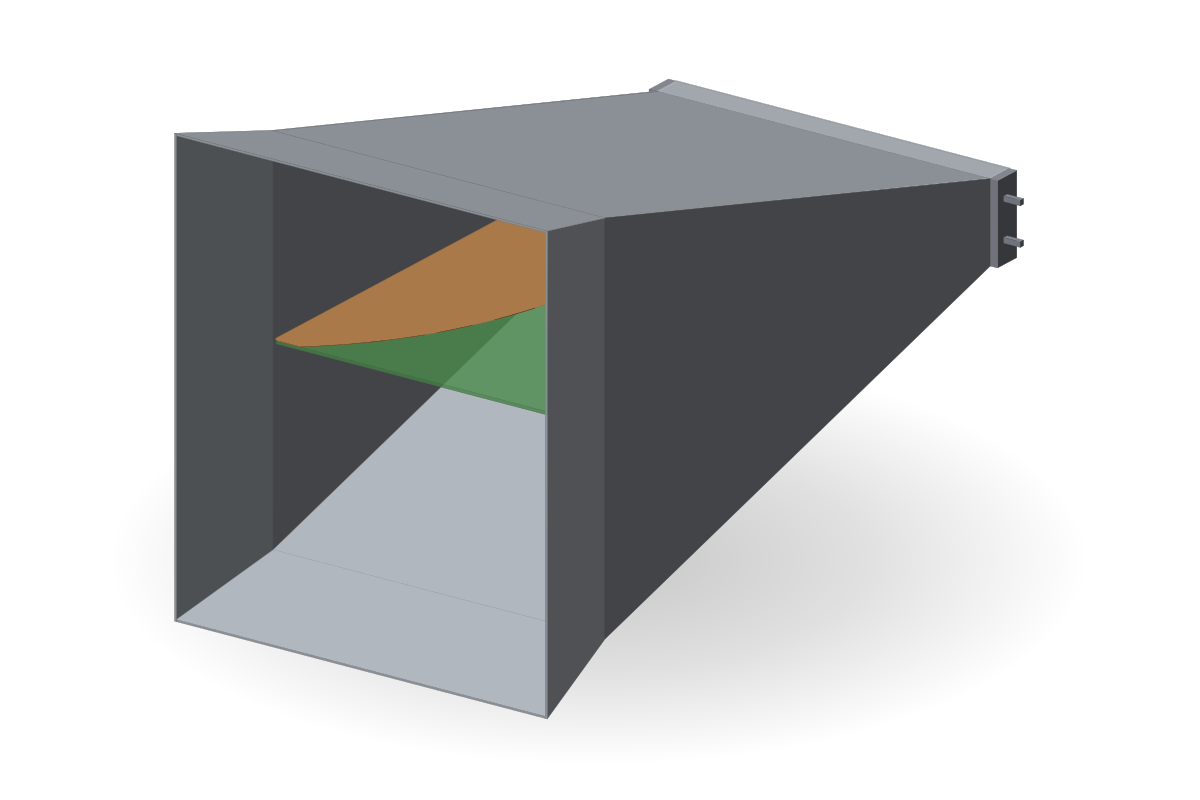
Double-ridged horn, 1–18 GHz, seen from the mouth
Overview
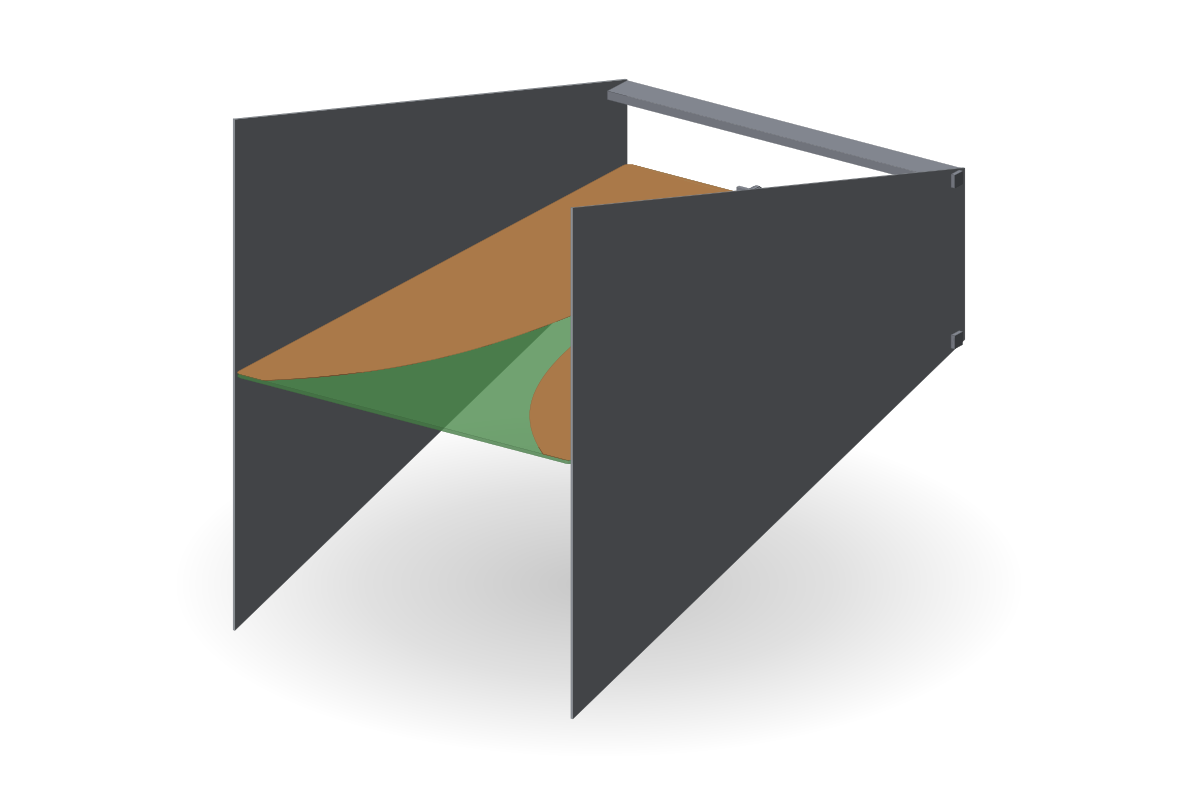
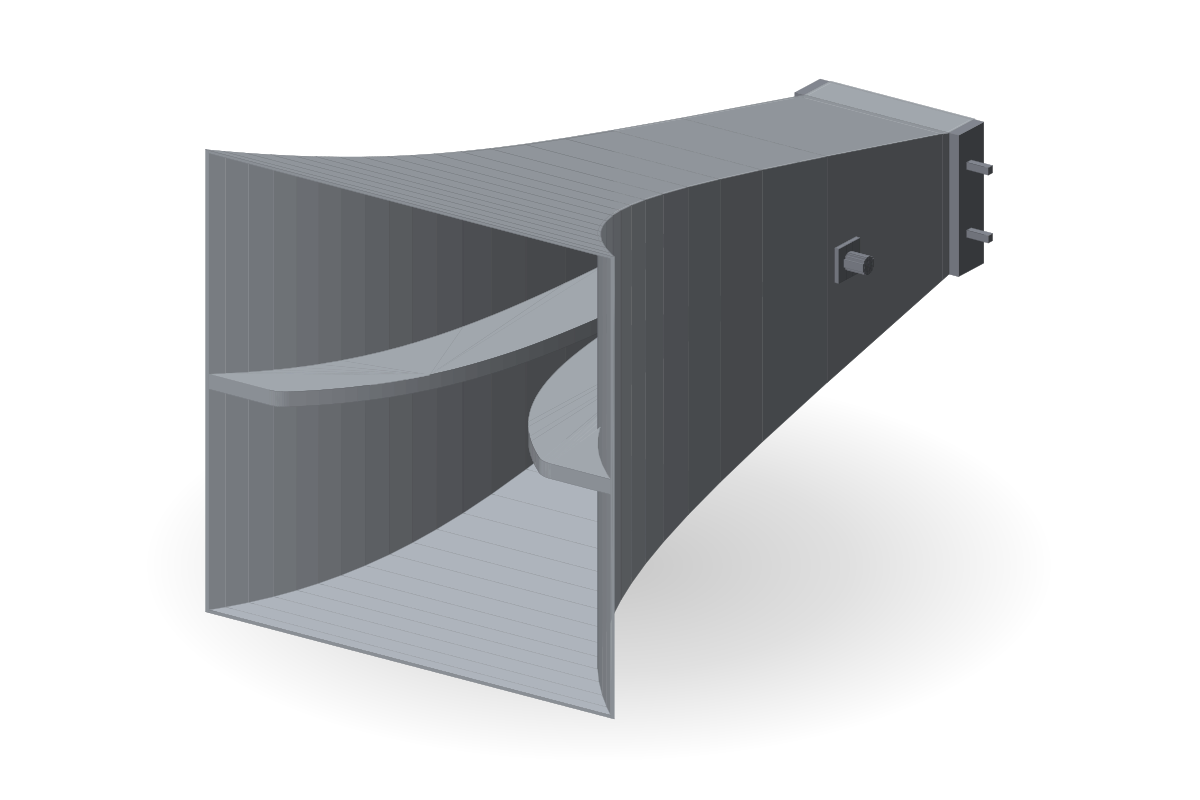
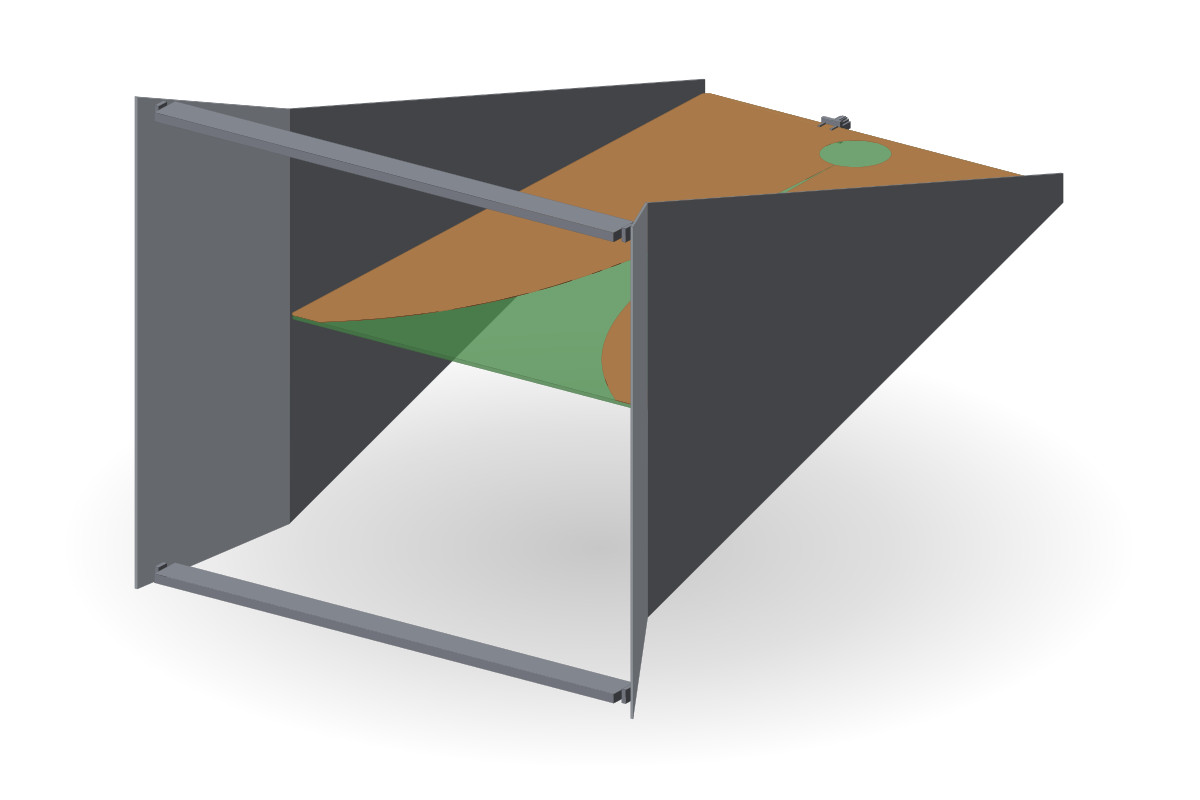
Measurement horns for EMC testing, calibration and antenna measurements: ridges with a smooth profile, a coaxial transition through the gap between the ridges, solid or open side walls. A horn with a Vivaldi plate is on the Vivaldi page.
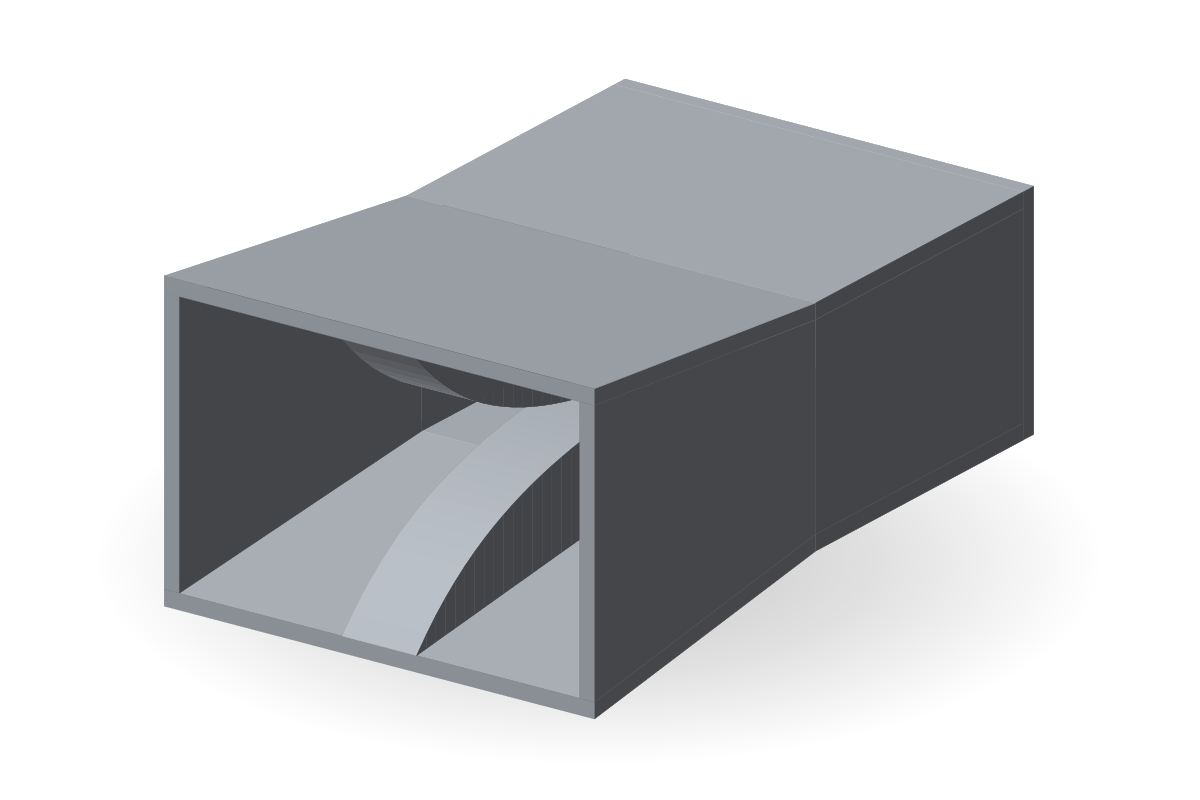
From the simplest to the most complex: a small 6–18 GHz horn with solid walls, up to a 1–18 GHz horn with smooth ridge profiles, a coaxial transition through the gap and open side walls.
Typical performance
Band up to 18 : 1 (1–18 GHz), VSWR ≈ 1.5–2.5typical
Gain ≈ 6–17 dBi, rising with frequencytypical
Beamwidth ≈ 20–60°, narrower at the upper frequenciestypical
Linear polarisationtypical
Typical values describe the antenna class, not a guarantee for a unit; “computed” marks our own simulated example.
View ASmall horn, 6–18 GHz
What we optimise
Pos.
Parameter
P1
Mouth size and horn length
P2
Ridge profile, gap
P3
Waveguide section
P4
Coaxial transition
What you receive
Pos.
Deliverable
D1
Flat patterns of the walls and ridges for laser cutting and bending
D2
A drawing of the transition
D3
A 3D model
D4
An S11 measurement protocol
Designs
Small horn, 6–18 GHzDouble-ridged horn with side walls, a Vivaldi plate insideV29-type plate in a double-ridged horn, coax through the wallVivaldi board in a closed pyramidal hornTEM horn: two triangular plates